Interviewing - Final Round Learnings

After going through a final-round interviews as a senior iOS engineer, I’ve learned that technical skills alone aren’t enough. The best candidates excel across multiple dimensions: system design thinking, behavioral storytelling, code review acumen, and interview presence. This post captures the hard-won lessons from my recent interview experiences—what worked, what didn’t, and what I’d do differently next time. These aren’t theoretical tips, but practical insights that came from real feedback and reflection. ...
Symmetric Tree

Leetcode considers this question to be easy, but it was a bit more complicated than that at first for me. Let’s try solving it three different ways: Whenever I can, I always try to do BFS. It seems much more natural. BFS - 1st solution func isSymmetricBFS(_ root: TreeNode?) -> Bool { var queue: [TreeNode?] = [] queue.append(root) while !queue.isEmpty { let temp = queue queue.removeAll() // 🔑 to make sure you don't expand on `nil` nodes — otherwise it would be endless for node in temp where node != nil { queue.append(node?.left) queue.append(node?.right) } if isSymmetric(temp) == false { return false } } return true } BFS feels very natural because you traverse layer by layer. Here we have the logic broken down nicely: ...

Separate Devices, Better Life: Why Personal Freedom Beats Using Your Work MacBook

Pros Performance Company keeps adding more monitoring. Your MacBook will only get slower. You will get annoyed by this. Mike Zorn's comment about this post Apple is finding more ways to restrict access to surveillance. This forces companies to restrict access to tools further because they lack the visibility into things. You pay the price… Often developers get even restricted from using tools like Charles Proxy / Proxyman, because they require adding a new root certificate which then interfere with company’s monitoring tools. You can leave your work laptop at work. Never carry it back and forth with yourself. Go easy on your back. Read a book, breath fresh air, make a friend. I find this to be significantly refreshing. I don’t get when people carry heavy laptops back and forth with zero usage at home. Your office should be treated as a safe as your home. There’s a ton of stuff that you 1) you must use a laptop. Can’t use your iPhone for 2) absolutely don’t want done with your work laptop. Doing your taxes Applying and interviewing at other companies Screen Recording and sharing. You don’t want to be accidentally sharing something that was your company’s sensitive data. Your company’s intent might just be compliance. But the affect on you is the same ...

Different paths to success

How to Get Into Software Engineering

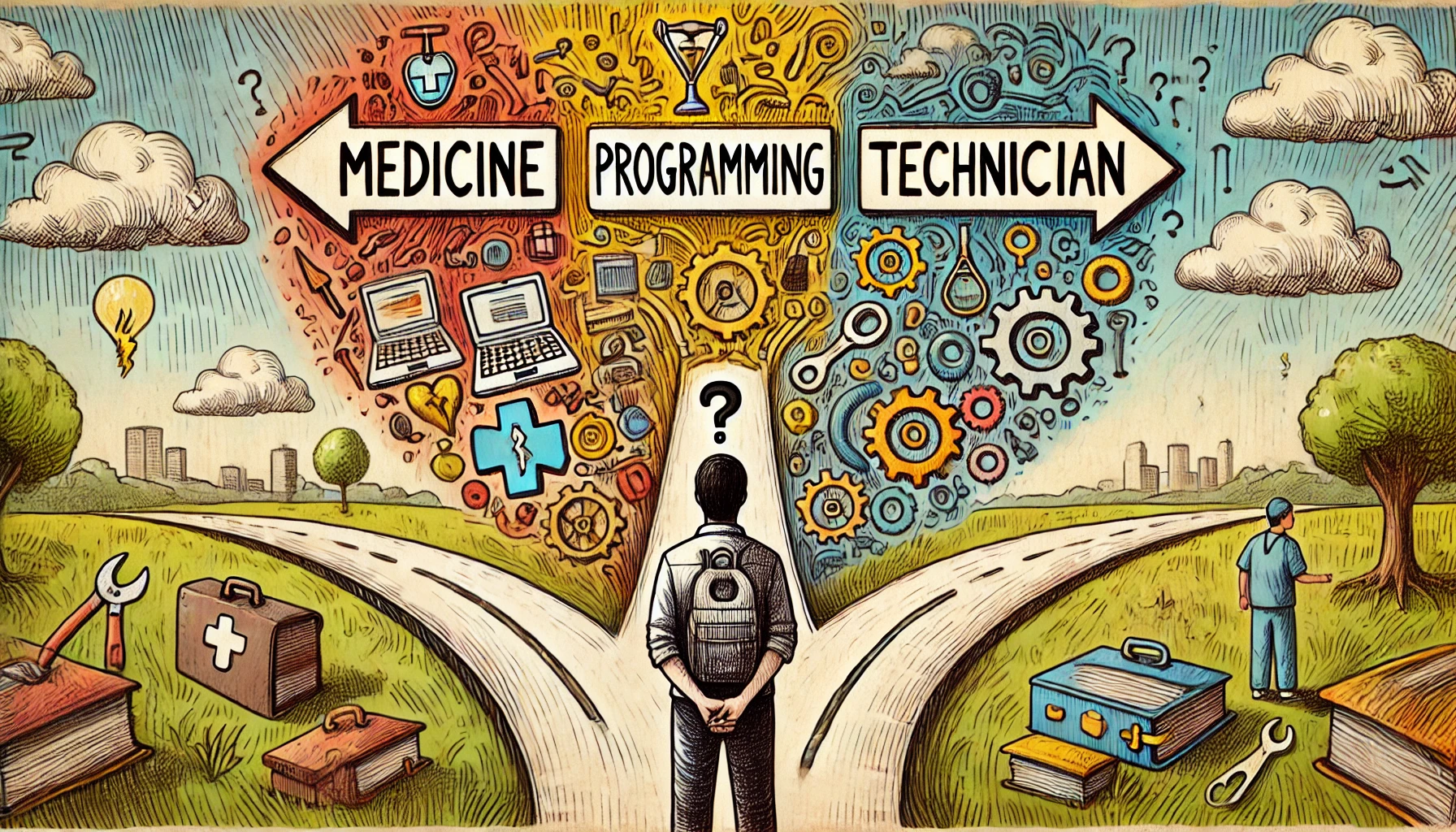
This post is based on my personal experience and is a bit oversimplified for brevity. Update: Added some of the feedback that I got from some readers. Is Software Engineering Still the Golden Ticket? What About Medicine… or Trades? A few years ago, if you asked anyone, “What should I study to make good money?” the answer was almost always: programming. Fast forward to today, and the answer isn’t so clear-cut. ...

Why Can't You Loop Over Ranges of Characters in Swift

This is a follow up from my previous post: The power and expressiveness of Swift ranges. For a Character Range: contain works fine let numericalRange = 1...10 numericalRange.contains(8) // true let a: Character = "a" let z: Character = "z" let alphabeticalRange = a...z alphabeticalRange.contains("k") // true for-loop and count don’t work print(numericalRange.count) // 10 print(alphabeticalRange.count) // ❌ Referencing property 'count' on 'ClosedRange' requires that 'Character' conform to 'Strideable' for num in numericalRange { print(num) // 1 2 3 4 5 6 7 8 9 10 } for char in alphabeticalRange { // ❌ Referencing instance method 'next()' on 'ClosedRange' requires that 'Character' conform to 'Strideable' print(char) } What both of those errors mean is that Swift can’t figure out what the next character is for a given character. The folks who implemented Character chose not to conform it to Strideable. ...

How Quantifying Impact Helps Your Career Growth

Learning from my product peers, TIL if you’re making an impactful change, it’s not just about the change itself—it’s about how you communicate its success. A compelling story can amplify your impact, but every great story needs a foundation of data to back it up. Logs, metrics, and dashboards are essential tools that help you visualize, quantify the problem and measure the impact of your solution from the perspectives of: ...

How Do Binaries work together? What breaks ABI?

For two (dynamic) libraries to work together they need: API compatibility ABI compatibility If you have correct function, parameter names, and are able to access it (it’s not private) then you’re good. The compiler validates if classA is using the correct Programming Interface from classB 👈 API (Application Programming Interface) Example of API usage struct House { var address = Address(streetAddress: "1100 Happy St.") } struct Person { var address = Address("1100 Sad St.") // ‼️ Missing argument label 'streetAddress:' in call } struct Address { let streetAddress: String } ABI compatibility is similar to API, but just at the binary level. The compiler is no longer involved. What’s involved is the dynamic linker dyld. ...

Some vs Any

What problem do some and any solve? var x: Equatable = 10 // Error: Use of protocol 'Equatable' as a type must be written 'any Equatable' var y: Equatable = "10" // Same error You’s think the compiler should let the above compile, it rightfully doesn’t. The compiler can’t know if the associated type of x, matches with the associated type of y. So it just forbids it. Compiler just doesn’t want to be in situation where you’d try something like: ...

Hugo Post Formatting Basics

Markdown Your posts can be formatted using markdown syntax. It’s critical to know how it works. It’s super simple. Frontmatter You can add tags: [swift, json, network call] and it will then add the tags to your post. Add showToc: true and will show a table of contents for your post. Hugo automatically takes the first 70 words of your content as its summary and stores it into the .Summary variable The date of the field affects the order of the post. So if you drafted the markdown of your file 2yrs ago, but published it today, then make sure you adjust the date. Otherwise it will be buried under the newer posts. Instead, you can manually define where the summary ends with a “!–more–” (Notes: must be wrapped inside angle brackets) divider. Alternatively, you can add a summary to the front matter if you don’t want your summary to be the beginning of your post Customize Description. The value of this field is used as an abstract in your front page and link previews. Add two spaces to create new line after a line end. Otherwise hugo will just continue the line. This is something hard to grasp. Because of this I usually manually review my rendered post with hugo server -D Syntax Formatting Highlighting individual code lines. Example: class Foo { var name = "Jack" } or I can add line numbers: ...

Hugo High Level

This is the 2nd post of “Everything I learned from blogging with Hugo” series Why Hugo? Hugo is a Static Site Generator. Key is the word “static”. It means: A static website is made up of one or more HTML webpages that load the same way every time. Static websites contrast with dynamic websites, which load differently based on any number of changing data inputs, such as the user’s location, the time of day, or user actions. While static webpages are simple HTML files that can load quickly, dynamic webpages require the execution of JavaScript code within the browser in order to render ...